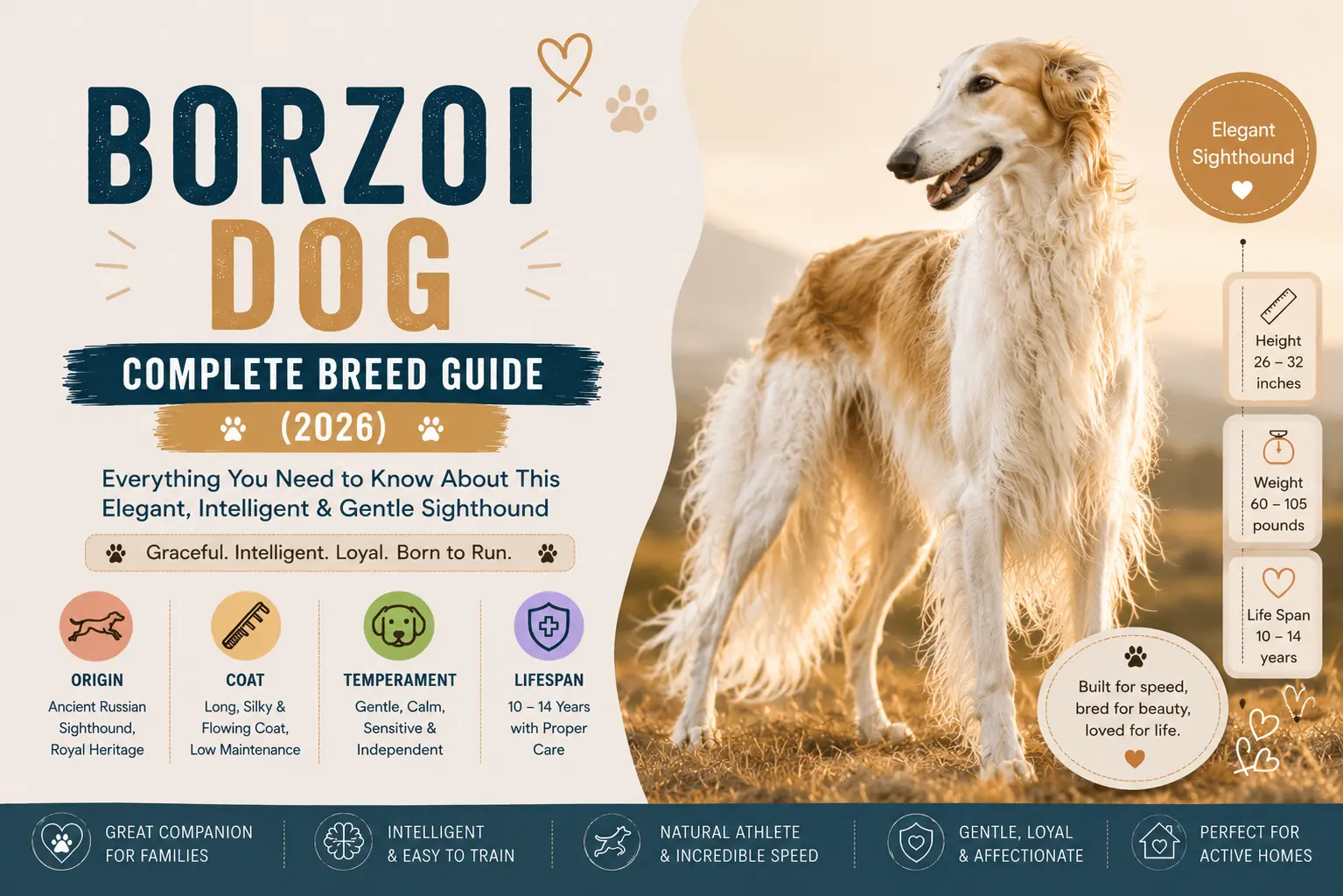
The Borzoi dog is one of the most elegant and recognizable dog breeds in the world. Known for its long, silky coat, narrow head, and graceful movement, this ancient sighthound was originally developed in Russia to hunt wolves across vast open landscapes. Today, the Borzoi is valued less for hunting and more for its calm personality, affectionate nature, and striking appearance.
Although Borzois look similar to Greyhounds, they are not the same breed. They are generally taller, have a longer coat, and tend to be more reserved with strangers. At home, many owners describe them as quiet, gentle companions that enjoy relaxing indoors after getting enough daily exercise.
However, this breed is not suitable for everyone. Their strong prey drive, independent personality, and need for secure outdoor space mean prospective owners should carefully consider whether a Borzoi matches their lifestyle.
This guide explains everything you need to know from the breed’s history and physical characteristics to health concerns, grooming requirements, training tips, and the true cost of ownership.
Quick Answer
The Borzoi is a large Russian sighthound originally bred for wolf hunting. It is known for its elegant appearance, gentle temperament, independent personality, and impressive speed. Borzois make loyal family companions for experienced owners who can provide regular exercise, patient training, and a secure environment. While generally calm indoors, they require space to run safely because of their strong instinct to chase moving animals.
At a Glance
| Characteristic | Details |
|---|---|
|
🐶
Breed Group
|
Hound (Sighthound) |
|
🌍
Origin
|
Russia |
|
📏
Height
|
26–32 inches |
|
⚖️
Weight
|
60–105 pounds |
|
❤️
Lifespan
|
9–14 years |
|
🧥
Coat
|
Long, silky, slightly wavy |
|
✨
Shedding
|
Moderate to High |
|
😊
Temperament
|
Gentle, Quiet & Independent |
|
⚡
Energy Level
|
Moderate |
|
👨👩👧
Good with Children
|
Yes, with supervision |
|
🐕
Good with Other Dogs
|
Usually Yes |
|
🐇
Good with Small Pets
|
Often No (Strong Prey Drive) |
|
⭐
Difficulty Level
|
Moderate |
History of the Borzoi
The Borzoi originated in Russia hundreds of years ago, where aristocrats developed the breed to hunt wolves, foxes, and hares across vast open fields. Unlike scent hounds that track prey through smell, Borzois belong to the sighthound family. They locate prey using exceptional eyesight and rely on incredible speed to catch it.
Russian nobles often organized large hunting expeditions involving dozens of Borzois working together with horseback riders. Their combination of speed, endurance, and agility made them one of the most respected hunting breeds in Eastern Europe.
The breed was once known as the Russian Wolfhound, but the name was officially changed to Borzoi, derived from a Russian word meaning “swift.”
Following the Russian Revolution, the breed’s numbers declined significantly because many aristocratic kennels disappeared. Fortunately, Borzois that had already been exported to Europe and North America helped preserve the breed.
Today, the Borzoi is recognized worldwide as both a companion dog and a successful participant in conformation shows and canine sports.
Breed Characteristics
The Borzoi dog is often described as a dog that combines elegance with athletic ability.
Unlike highly energetic working breeds that constantly seek activity, Borzoi dog tend to have balanced energy levels. They enjoy running at high speed but are usually relaxed indoors once their exercise needs have been met.
Several characteristics define the breed:
- Quiet around the home
- Highly intelligent
- Independent thinker
- Gentle with family members
- Reserved with strangers
- Extremely fast
- Strong prey drive
- Sensitive personality
Owners frequently describe Borzois as “cat-like” because they often prefer making their own decisions instead of blindly following commands.
Appearance
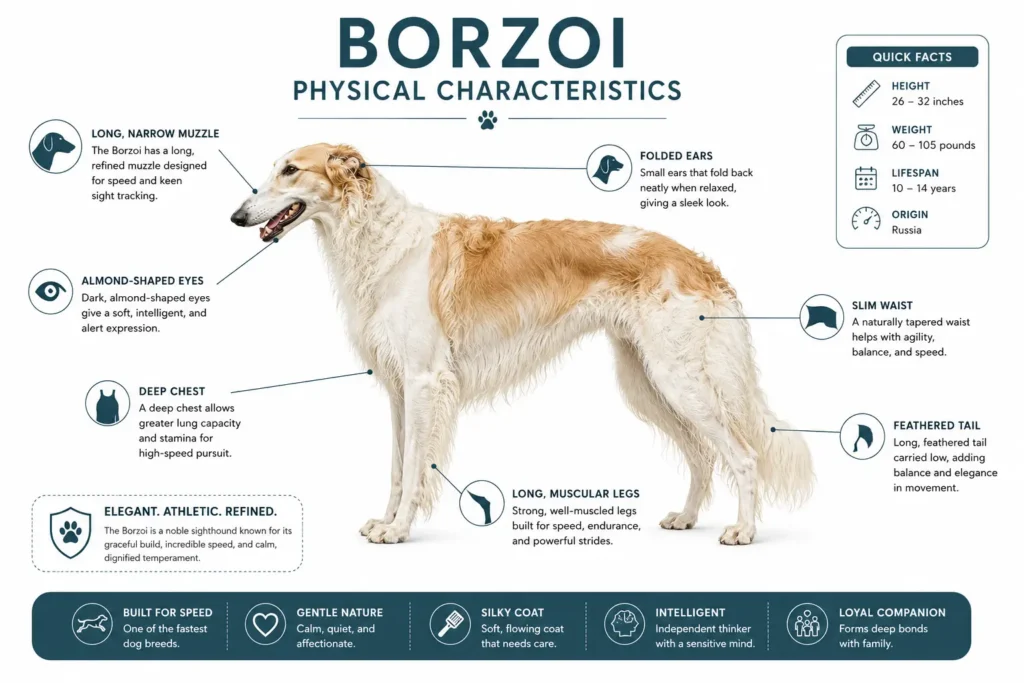
Few dog breeds are as visually distinctive as the Borzoi dog.
Its long, narrow head, elegant neck, deep chest, and curved body create an appearance that seems almost sculpted. Every part of the breed reflects the speed and agility needed for sight hunting.
The Borzoi’s most recognizable features include:
Despite their graceful appearance, Borzois possess remarkable strength. Their flexible spine allows them to stretch into long strides while running, similar to Greyhounds and other sighthounds.
Size and Weight
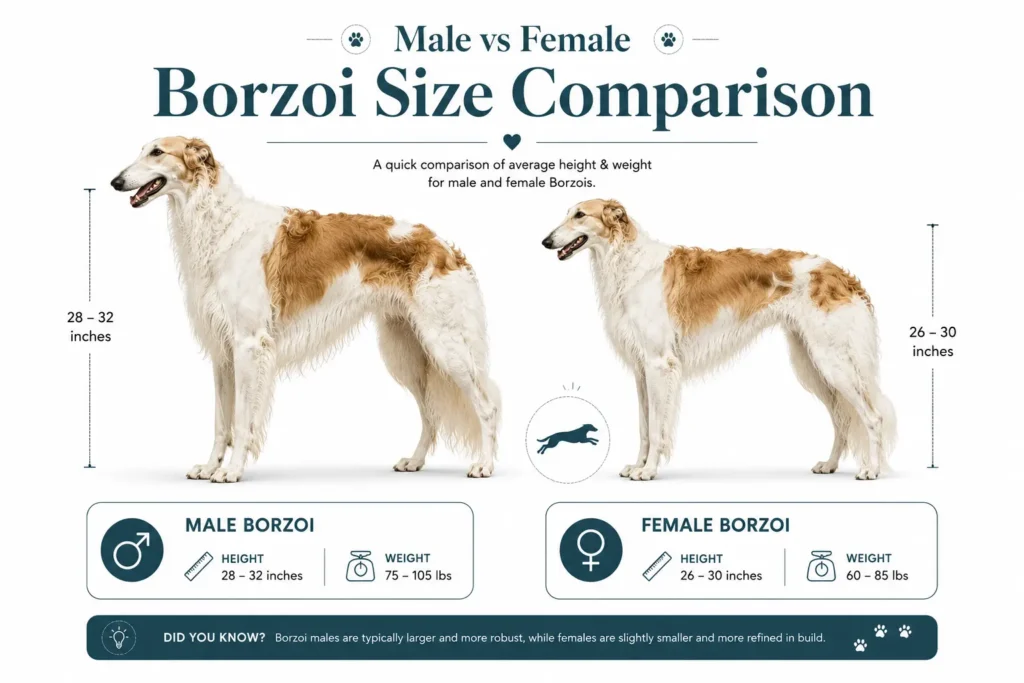
Borzois are among the tallest dog breeds.
Although they are large dogs, they rarely appear bulky. Their lean physique is a natural feature of the breed rather than a sign of poor health.
Because of their size, Borzoi dog require enough indoor space to move comfortably without constantly bumping into furniture.
Coat and Colors
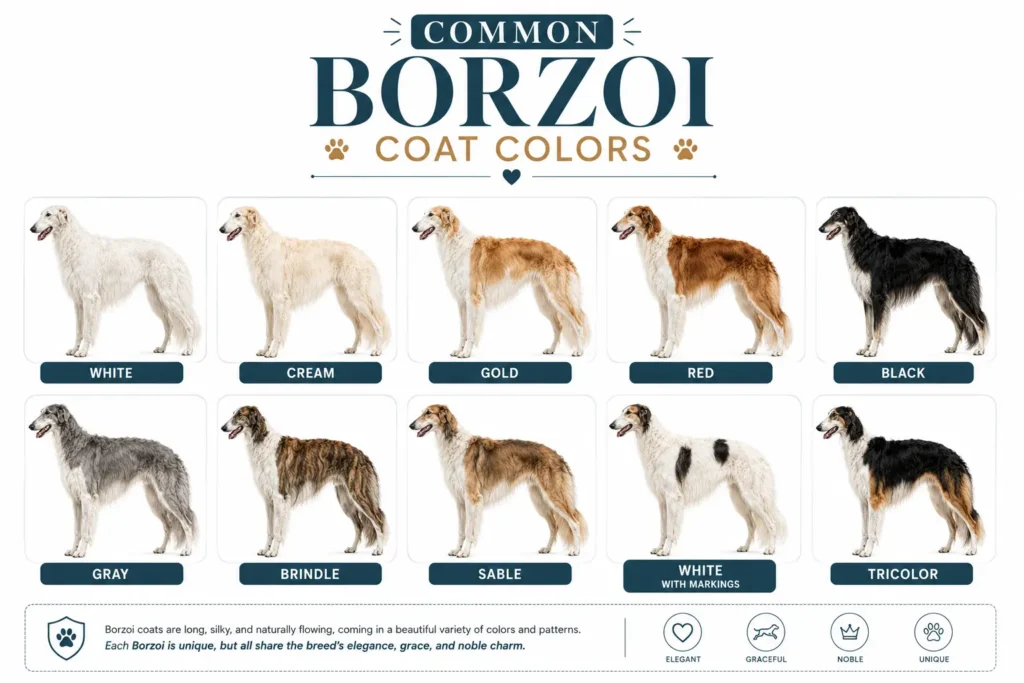
One of the Borzoi’s defining characteristics is its luxurious coat.
The coat is typically:
This coat originally protected the breed from Russia’s harsh winters while hunting across snow-covered landscapes.
Common Coat Colors
The breed can appear in many beautiful color combinations, including:
Because the breed standard accepts numerous coat colors, appearance can vary significantly between individual dogs.
Why Are Borzois So Fast?
Speed is one of the Borzoi dog greatest strengths.
Several physical characteristics contribute to their impressive athletic ability:
Flexible Spine
Allows longer strides and exceptional running efficiency.
Powerful Hindquarters
Generate explosive acceleration and sprinting power.
Deep Chest
Provides room for large lungs, supporting endurance and oxygen intake.
Long Legs
Increase stride length and help achieve remarkable speed.
Lightweight Frame
Reduces resistance and improves agility while running.
Excellent Eyesight
Enables the Borzoi to spot moving prey from long distances.
🏃 Top Speed
A healthy Borzoi can reach speeds of approximately 35–40 mph (56–64 km/h), making it one of the fastest dog breeds in the world.
A healthy Borzoi dog can reach speeds of 35–40 miles per hour, making it one of the fastest dog breeds in the world.
However, this speed also explains why owners should never allow a Borzoi dog to roam off leash in unsecured areas. Once they notice a rabbit, squirrel, or other moving animal, instinct often overrides training.
Is the Borzoi Right for First-Time Dog Owners?
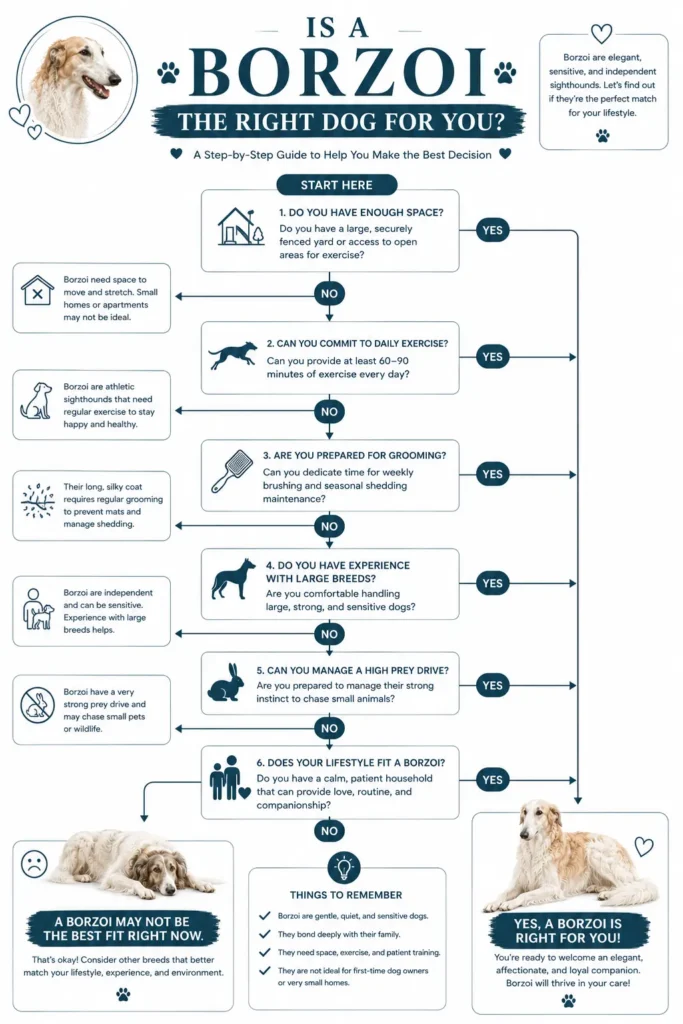
The answer depends on the owner’s expectations.
A Borzoi dog is generally not considered the easiest breed for beginners because it combines intelligence with independence.
New owners often expect dogs to obey commands immediately. Borzois prefer to evaluate situations before responding, which can sometimes be mistaken for stubbornness.
This breed is best suited for people who:
People looking for a highly obedient working dog may find breeds such as the Labrador Retriever or Golden Retriever easier to train.
Key Facts About the Borzoi
Borzoi Dog Temperament
The Borzoi dog is widely admired for its calm and dignified personality. Unlike many energetic breeds that constantly seek attention, Borzois are generally quiet, composed, and independent. They often form strong bonds with their families while maintaining a reserved attitude toward unfamiliar people.
Many owners describe living with a Borzoi dog as sharing a home with an intelligent roommate rather than an overly dependent pet. The breed enjoys affection on its own terms and usually prefers peaceful environments over noisy, chaotic households.
Although Borzois are loving companions, they are not typically known for being overly playful or constantly seeking interaction. Their calm demeanor makes them appealing to owners looking for a relaxed large-breed dog.
Personality Traits
Understanding the Borzoi’s personality is essential before bringing one home.
Gentle Nature
Borzois are naturally gentle dogs. They rarely display unnecessary aggression and generally prefer avoiding conflict whenever possible. Their calm behavior often surprises people who expect such a large hunting breed to be highly energetic all day.
Independent Thinkers
One of the breed’s defining characteristics is independence. Because Borzois were bred to make split-second hunting decisions without constant human direction, they often evaluate situations before responding.
This independence should not be confused with low intelligence. In fact, Borzois learn quickly but may choose not to repeat commands that seem unnecessary to them.
Quiet Companions
Excessive barking is uncommon in this breed. Most Borzois remain relatively quiet and alert their owners only when they believe something deserves attention.
Sensitive Personality
Harsh corrections rarely work well with Borzois. They respond far better to patient, reward-based training built on trust and consistency.
Are Borzois Good Family Dogs?
For the right household, Borzoi dog can become excellent family companions.
They often develop deep attachments to their owners and enjoy spending time close to the people they trust. However, their calm personality means they are generally better suited to families who appreciate a quieter dog rather than one that constantly seeks attention.
Living With Children
Borzois usually behave well around respectful children who understand how to interact with large dogs.
Young children should always be supervised because:
- Borzois are tall and can accidentally knock over toddlers.
- They dislike rough handling.
- Loud, chaotic behavior may cause stress.
Teaching children to respect the dog’s personal space helps build a positive relationship.
Do Borzois Get Along With Other Dogs?
Generally, yes.
Borzoi dog often enjoy the company of other medium and large dogs, especially if they have been socialized from an early age.
Positive experiences during puppyhood help them become confident and relaxed around unfamiliar dogs.
However, every dog’s personality is unique, so careful introductions remain important.
Can Borzois Live With Cats?
This depends largely on the individual dog.
Borzois have an exceptionally strong prey drive because they were originally bred to chase fast-moving animals. Cats raised alongside a Borzoi from puppyhood often become accepted family members.
Introducing an adult Borzoi dog to unfamiliar cats can be much more challenging.
Regardless of previous experience, interactions between Borzois and small pets should always be supervised until their behavior is well understood.
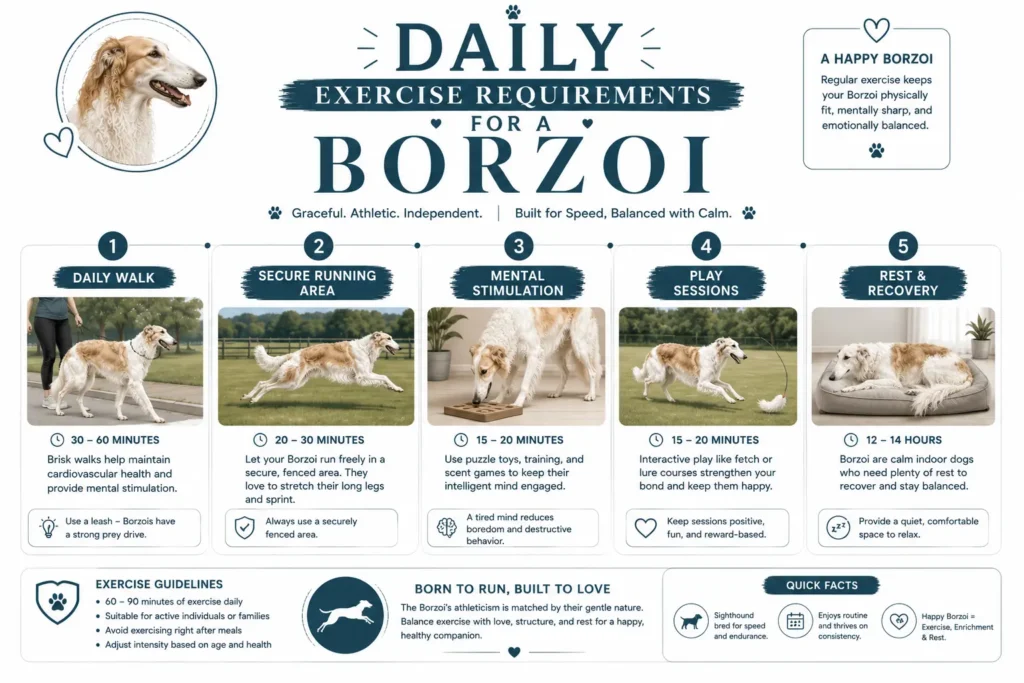
Exercise Requirements
Although Borzoi dog enjoy relaxing indoors, they still require regular physical activity to remain healthy.
Many first-time owners mistakenly assume a calm indoor personality means the breed needs little exercise. In reality, Borzois benefit from daily opportunities to stretch their legs and run safely.
Daily Exercise Needs
A healthy adult Borzoi dog generally requires:
- One to two hours of daily activity.
- Long walks.
- Secure off-leash running in fenced areas.
- Mental stimulation through exploration.
Because of their prey drive, unsecured parks or open fields are not suitable places to allow a Borzoi dog off leash.
Safe Exercise Ideas
Activities that work well include:
- Long neighborhood walks.
- Large fenced dog parks during quiet hours.
- Lure coursing.
- Hiking.
- Controlled jogging after skeletal maturity.
- Interactive scent games.
Avoid repetitive high-impact exercise for growing puppies, as excessive strain can affect developing joints.
Mental Stimulation
Physical exercise alone is not enough.
Borzois also benefit from activities that engage their minds.
Examples include:
- Puzzle feeders.
- Hide-and-seek games.
- Nose work.
- Basic obedience sessions.
- Food-dispensing toys.
- New walking routes.
Keeping the dog’s brain active reduces boredom and encourages healthy behavior.
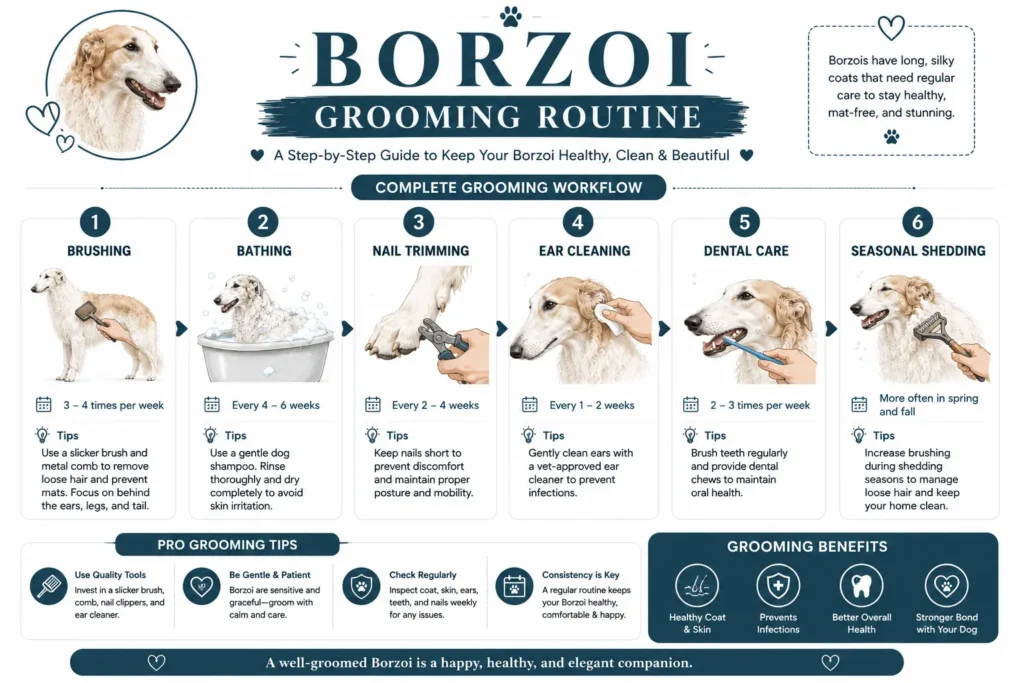
Grooming Requirements
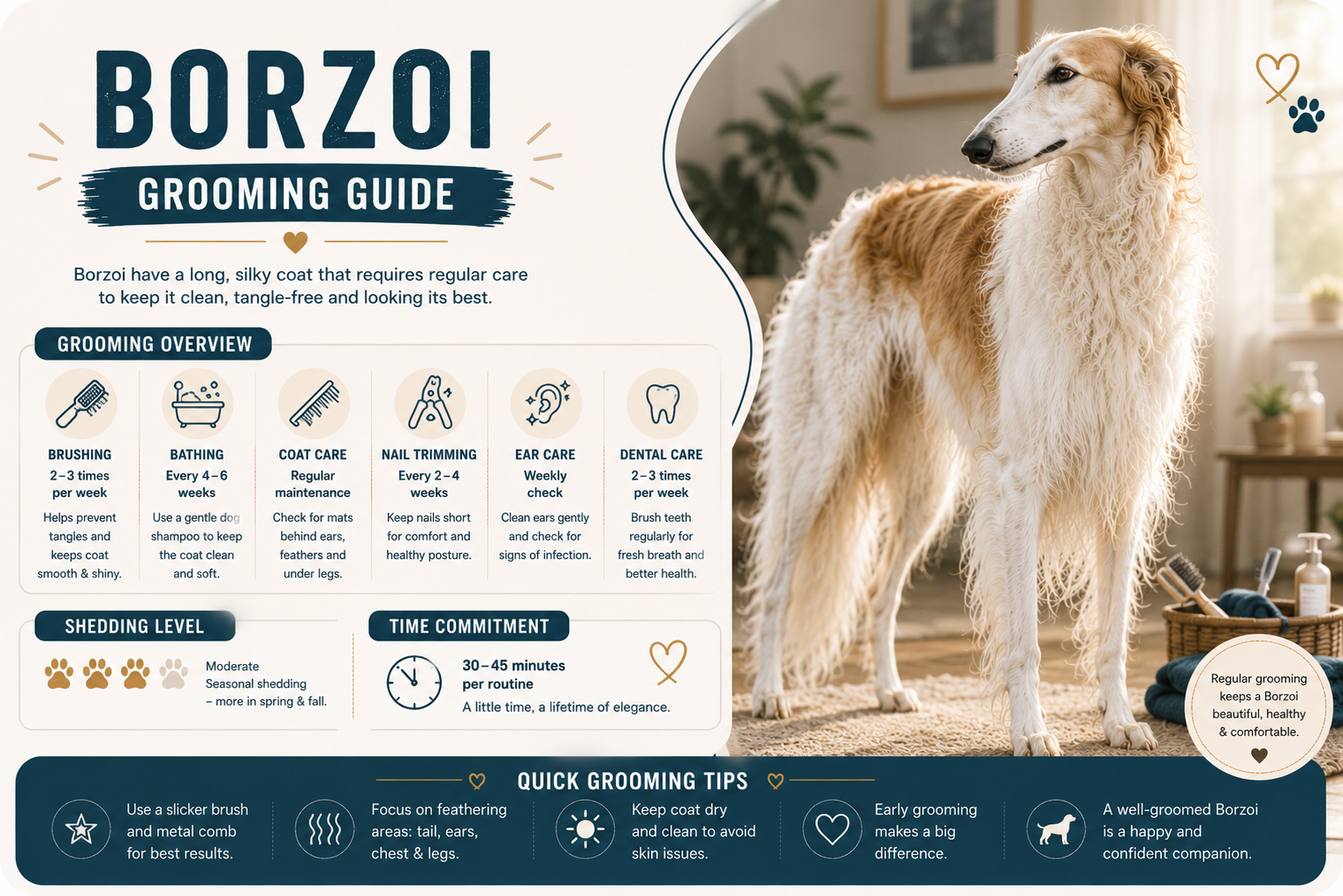
The Borzoi’s beautiful flowing coat requires consistent maintenance.
Fortunately, grooming is usually less demanding than many people expect because the silky coat tends to resist heavy matting when brushed regularly.
Brushing
Most owners should brush their Borzoi dog:
- Two to three times each week.
- More frequently during seasonal shedding.
Pay special attention to:
- Behind the ears.
- Under the legs.
- Tail feathers.
- Chest.
- Neck.
Regular brushing removes loose hair before it spreads throughout the home.
Bathing
Borzois generally remain fairly clean because their coats repel dirt surprisingly well.
Most healthy adults require bathing only every six to eight weeks unless they become particularly dirty.
Always use dog-specific shampoo designed for sensitive skin.
Nail Care
Because Borzois have long legs and elegant feet, overgrown nails can interfere with comfortable movement.
Check nails every two to four weeks.
If you hear clicking sounds while the dog walks across hard floors, the nails likely need trimming.
Ear Cleaning
Inspect the ears weekly.
Look for:
- Redness.
- Excess wax.
- Unpleasant odor.
- Swelling.
Routine cleaning using a veterinarian-approved ear solution helps reduce the risk of infections.
Dental Care
Dental hygiene often receives less attention than coat care, yet it plays an important role in long-term health.
Veterinarians generally recommend:
- Brushing the teeth several times each week.
- Providing approved dental chews.
- Scheduling professional cleanings when necessary.
Good dental care can reduce the risk of periodontal disease and support overall health.
Feeding and Nutrition
Proper nutrition helps maintain the Borzoi’s lean, athletic body.
Because the breed naturally has a slim appearance, owners should avoid overfeeding in an attempt to make the dog appear heavier.
General Feeding Guidelines
A healthy adult Borzoi dog typically benefits from:
- High-quality complete dog food.
- Balanced protein.
- Healthy fats.
- Essential vitamins and minerals.
- Fresh drinking water available at all times.
The exact amount depends on:
- Age.
- Weight.
- Activity level.
- Health condition.
- Food quality.
Always follow your veterinarian’s recommendations for portion sizes.
Foods to Avoid
Never intentionally feed:
- Chocolate.
- Grapes.
- Raisins.
- Onions.
- Garlic.
- Xylitol.
- Alcohol.
- Cooked bones.
- Macadamia nuts.
- Excessively fatty foods.
These foods may cause serious health problems in dogs.
Maintaining a Healthy Weight
Obesity places unnecessary strain on joints and increases the risk of several health conditions.
Owners should regularly monitor:
- Waist definition.
- Body condition score.
- Energy levels.
- Appetite.
- Weight changes.
Routine veterinary checkups help identify nutritional issues before they become serious.
Signs Your Borzoi Is Happy
Healthy, well-adjusted Borzoi dog often display several positive behaviors.
These include:
- Relaxed body posture.
- Bright, alert eyes.
- Good appetite.
- Smooth movement.
- Interest in daily walks.
- Calm behavior at home.
- Gentle interaction with family members.
- Healthy skin and coat.
Recognizing these signs helps owners monitor their dog’s overall well-being.
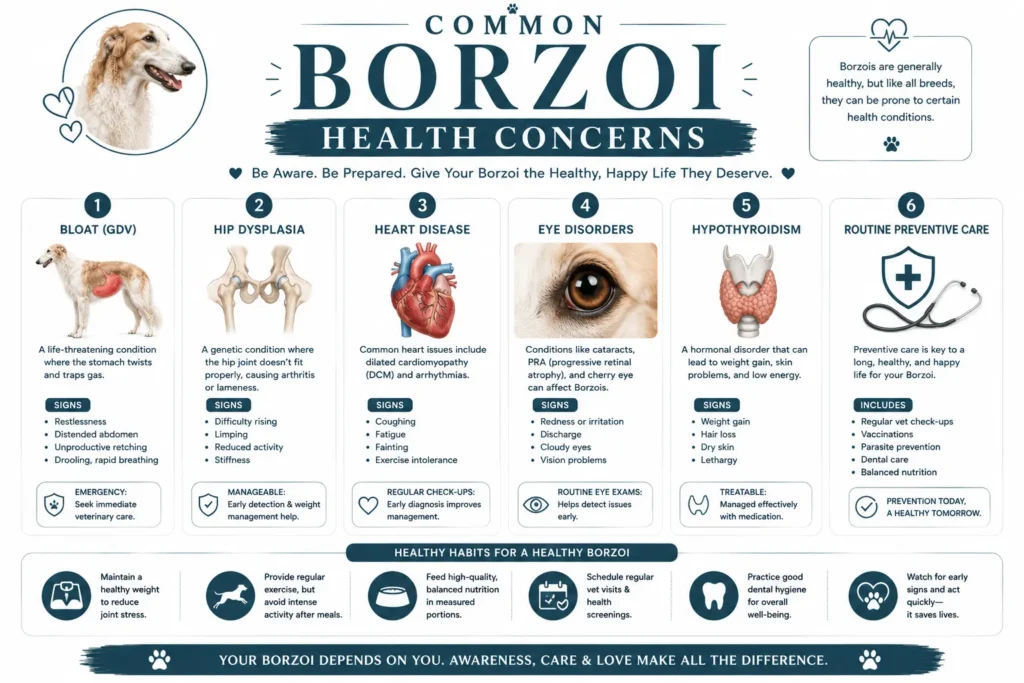
Common Health Problems in Borzois
Like all purebred dogs, Borzoi dog can be predisposed to certain inherited and age-related health conditions. Responsible breeding, regular veterinary care, and a healthy lifestyle significantly reduce the risk of many diseases, but prospective owners should understand the breed’s most common health concerns before bringing one home.
Owning a Borzoi dog is a long-term commitment that includes preventive healthcare, routine screenings, and close observation of behavioral changes. Early diagnosis often leads to better outcomes.
Gastric Dilatation-Volvulus (Bloat)
Bloat is considered one of the most serious medical emergencies affecting large, deep-chested breeds like the Borzoi dog.
The condition occurs when the stomach fills with gas and, in severe cases, twists on itself. Without immediate veterinary treatment, it can quickly become life-threatening.
Warning Signs
- Swollen abdomen
- Repeated unsuccessful attempts to vomit
- Restlessness
- Excessive drooling
- Rapid breathing
- Weakness
- Collapse
If these symptoms appear, seek emergency veterinary care immediately.
Prevention Tips
- Feed two or three smaller meals instead of one large meal.
- Avoid vigorous exercise immediately before or after eating.
- Slow down fast eaters using puzzle bowls.
- Ensure constant access to fresh water.
Hip and Joint Issues
Although Borzoi dog is naturally lean and athletic, some individuals may develop joint conditions as they age.
Potential issues include:
- Hip dysplasia
- Arthritis
- Muscle stiffness in senior dogs
Maintaining a healthy weight and providing appropriate exercise helps reduce stress on the joints.
Heart Conditions
Some Borzois may develop heart disease later in life.
Routine veterinary examinations allow heart abnormalities to be detected before symptoms become severe.
Possible warning signs include:
- Reduced stamina
- Persistent coughing
- Difficulty breathing
- Fainting episodes
- Lethargy
Eye Problems
Because Borzoi dog rely heavily on vision, eye health is especially important.
Veterinarians occasionally diagnose conditions such as:
- Progressive Retinal Atrophy (PRA)
- Cataracts
- Retinal disorders
Annual eye examinations are recommended, particularly for breeding dogs.
Thyroid Disorders
Hypothyroidism occasionally occurs in Borzois.
Symptoms may include:
- Weight gain
- Low energy
- Dry skin
- Hair thinning
- Cold intolerance
Fortunately, most cases can be managed successfully with lifelong medication under veterinary supervision.
Cancer
Like many large breeds, older Borzois have an increased risk of certain cancers.
Regular health checks and early investigation of unusual lumps, appetite changes, or unexplained weight loss improve the chances of early treatment.
Borzoi Lifespan
A healthy Borzoi typically lives between 9 and 14 years.
Several factors influence longevity, including:
- Genetics
- Diet
- Exercise
- Veterinary care
- Body weight
- Living environment
Many Borzois remain active well into their senior years when given appropriate preventive healthcare and nutrition.
Veterinary Care Schedule
Routine veterinary care plays a major role in keeping a Borzoi dog healthy throughout its life.
| Life Stage | Recommended Care |
|---|---|
| Puppy | Vaccinations, parasite prevention, routine growth monitoring, early socialization, and balanced nutrition. |
| Adult | Annual wellness examinations, dental care, vaccinations, weight management, and regular exercise. |
| Senior | Blood work, heart monitoring, joint evaluations, vision checks, and age-appropriate preventive veterinary care. |
Preventive care is almost always less expensive than treating advanced illness.
Training a Borzoi
Training a Borzoi dog requires patience rather than force.
Unlike breeds developed for constant obedience, Borzois were bred to think independently while hunting. As a result, they respond best to calm, consistent training methods built around positive reinforcement.
Best Training Methods
- Reward-based training
- Short training sessions
- High-value treats
- Gentle praise
- Consistency
- Early socialization
Avoid punishment-based methods, as harsh corrections may reduce confidence and damage trust.
Socialization
Proper socialization should begin during puppyhood.
Introduce your Borzoi dog to:
- New people
- Friendly dogs
- Different environments
- Household sounds
- Car rides
- Veterinary clinics
Positive early experiences help develop a confident, well-adjusted adult dog.
Can Borzois Live in Apartments?
Surprisingly, yes, provided their exercise needs are met.
Despite their large size, Borzois are relatively calm indoors and often spend long periods resting.
However, apartment owners should ensure the dog receives:
- Daily walks
- Mental stimulation
- Opportunities to run safely in enclosed spaces
Without sufficient exercise, boredom may lead to unwanted behaviors.
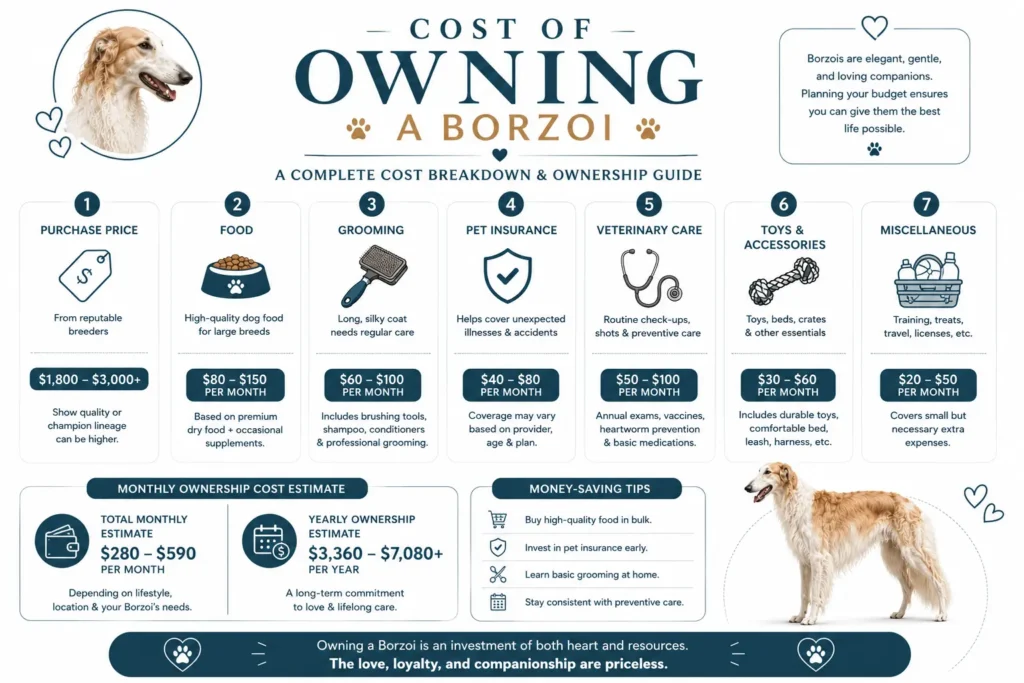
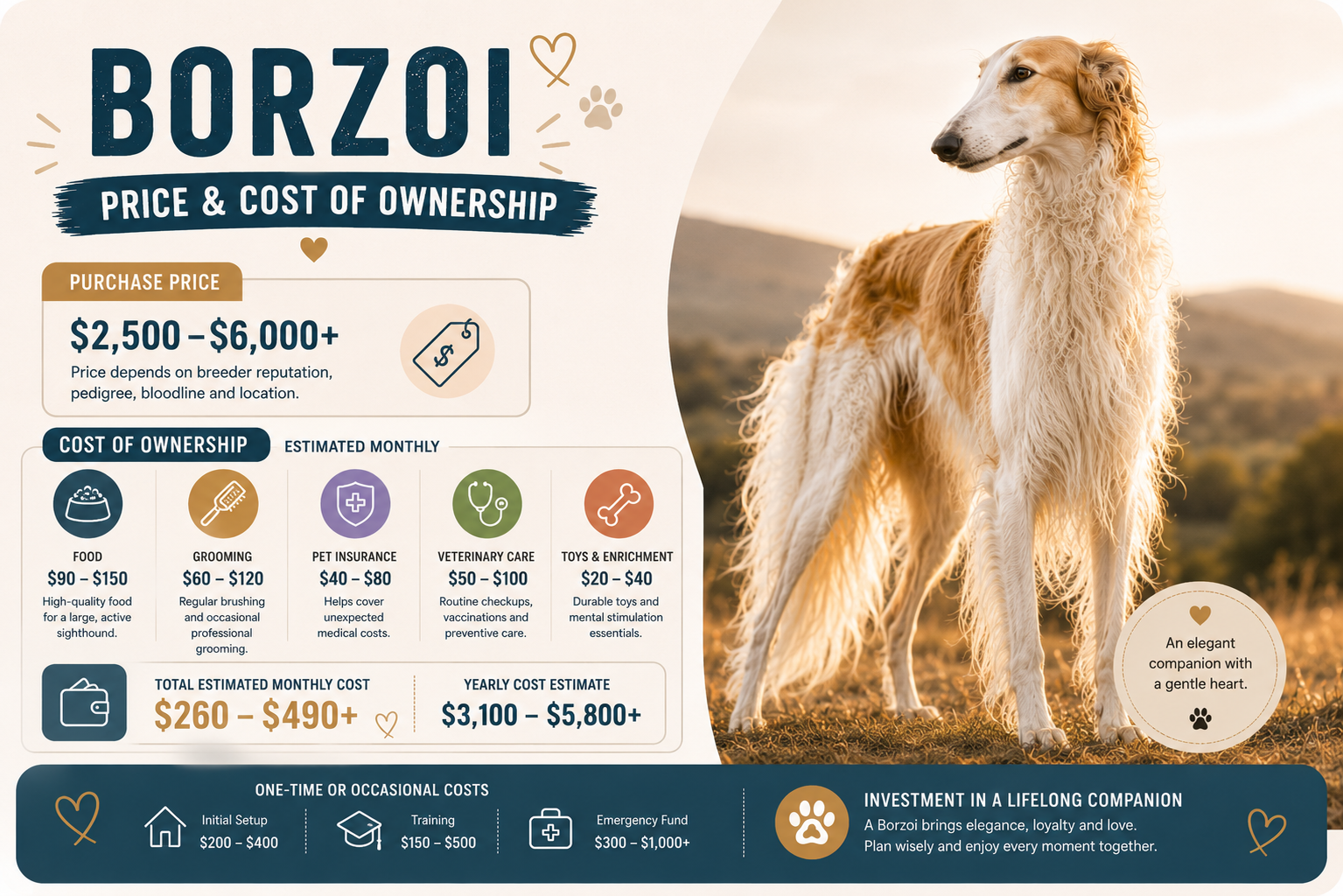
How Much Does a Borzoi Cost?
The purchase price varies depending on breeder reputation, pedigree, location, and whether the dog is intended for companionship or showing.
Typical Puppy Price
| Source | Estimated Cost (USD) |
|---|---|
| Reputable Breeder | $1,500–$3,500+ |
| Show Quality | $3,500–$6,000+ |
| Rescue Organization | $300–$800 |
Lower prices are not always bargains. Extremely cheap puppies may come from irresponsible breeding operations with inadequate health testing.
Monthly Ownership Costs
Owning a Borzoi involves ongoing expenses beyond the initial purchase price.
| Expense | Estimated Monthly Cost |
|---|---|
| Food | $70–$150 |
| Grooming | $20–$80 |
| Pet Insurance | $30–$90 |
| Veterinary Care (Average) | $30–$100 |
| Toys & Supplies | $20–$50 |
Actual costs vary depending on your location and your dog’s health.
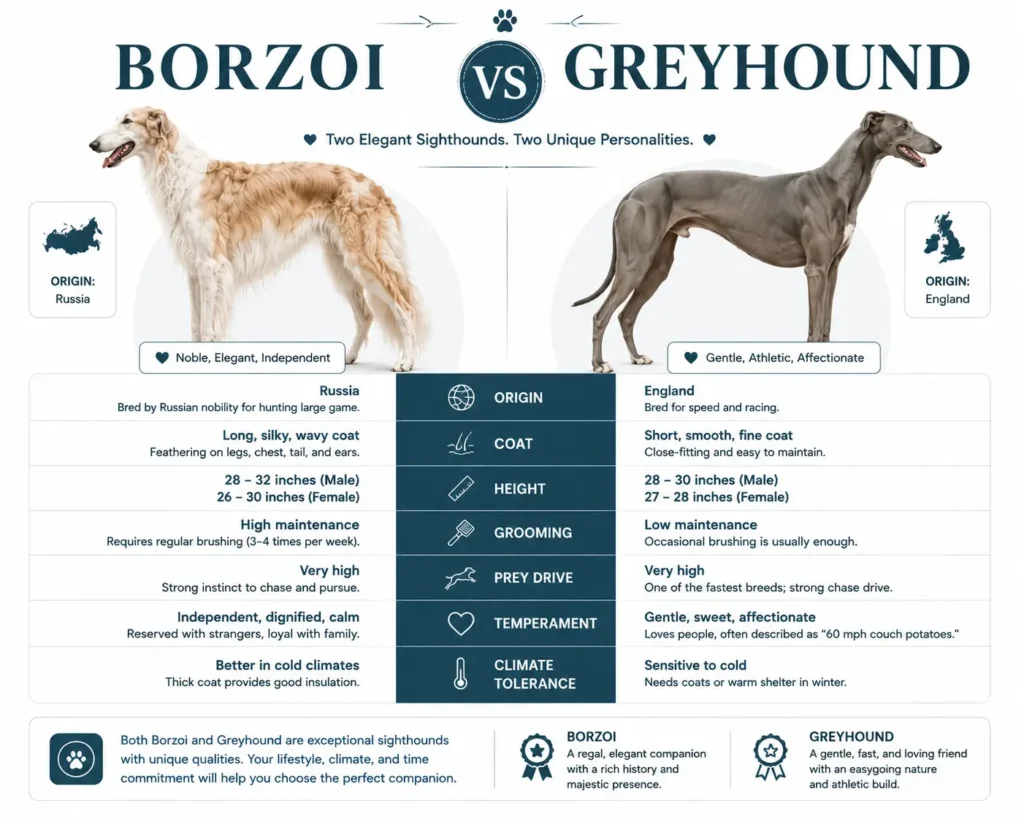
Borzoi vs Greyhound
Many people confuse these two breeds because both belong to the sighthound family.
| Feature | Borzoi | Greyhound |
|---|---|---|
| Origin | Russia | United Kingdom |
| Coat | Long & Silky | Short & Smooth |
| Height | Taller | Slightly Shorter |
| Grooming | Moderate | Low |
| Prey Drive | Very High | High |
| Personality | Reserved | Friendly |
| Climate Tolerance | Better in Cold Weather | Better in Moderate Climates |
While both breeds are incredibly fast, the borzoi dog flowing coat and elegant appearance make it instantly recognizable.
Pros and Cons
- Elegant and graceful appearance that stands out among large dog breeds. +
- Gentle, affectionate, and loyal with family members. +
- Quiet indoors with minimal barking compared to many breeds. +
- Highly athletic with impressive speed and agility. +
- Generally clean coat that resists heavy matting with regular brushing. +
- Intelligent and capable of learning through positive reinforcement. +
- Very strong prey drive makes off-leash exercise risky. −
- Independent personality can make training more challenging. −
- Requires regular coat maintenance and brushing. −
- Large size requires adequate indoor and outdoor space. −
- Can be expensive to feed and maintain over time. −
- Not ideal for homes with rabbits, birds, or other small pets. −
Is the Borzoi the Right Dog for You?
A Borzoi may be an excellent choice if you:
- Appreciate calm dogs.
- Have enough space for a large breed.
- Can provide daily exercise.
- Prefer a quiet companion.
- Enjoy grooming.
You may wish to consider another breed if you:
- Want an off-leash hiking companion in unfenced areas.
- Prefer highly obedient dogs.
- Own rabbits, hamsters, or other small pets.
- Have very limited living space without nearby exercise opportunities.
Frequently Asked Questions
Are Borzois aggressive?
Do Borzois bark a lot?
Are Borzois easy to train?
Can Borzois live with children?
How fast can a Borzoi run?
Do Borzois shed?
How often should a Borzoi be groomed?
Are Borzois good guard dogs?
Can Borzois be left alone?
Are Borzois good for first-time owners?
Final Verdict
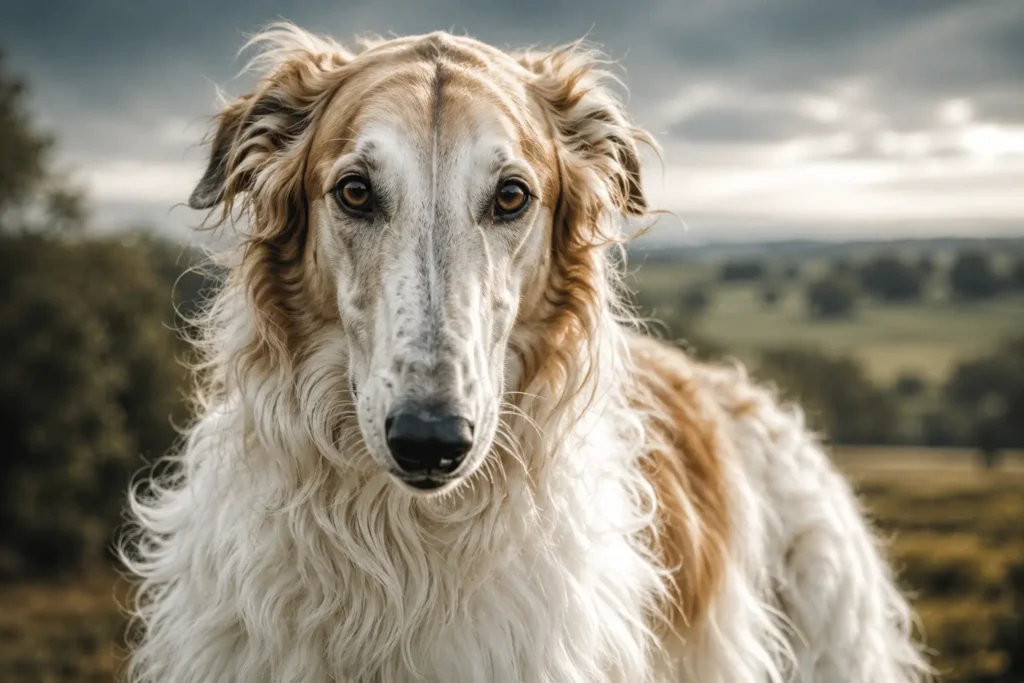
The Borzoi is one of the world’s most graceful dog breeds, combining athletic ability with a calm and affectionate personality. While originally bred to hunt wolves across the Russian countryside, today’s Borzoi is better known as a loyal companion that enjoys peaceful family life, daily walks, and opportunities to run in secure areas.
This breed is not the right fit for every household. Its independent nature, strong prey drive, and grooming requirements demand owners who understand the responsibilities of caring for a large sighthound. However, for families prepared to meet those needs, the Borzoi offers loyalty, elegance, and companionship that few breeds can match.
Whether you’re researching your first Borzoi or simply learning about one of the most distinctive dog breeds, understanding its temperament, health, exercise needs, and long-term care requirements will help you make an informed decision and provide the best possible life for your dog.
Discover More Expert Dog Guides
Whether you’re researching your next pet or comparing different breeds, our complete collection of dog breed guides offers practical advice, veterinary-backed care tips, and in-depth comparisons for every type of owner.

Related Posts