
Borzoi Puppy Guide
Bringing home a Borzoi puppy is an exciting experience, but this elegant breed requires thoughtful care from the very beginning. While Borzoi puppies are playful and curious, they also grow rapidly into large, athletic dogs with unique physical and behavioral needs.
The first year of a Borzoi’s life plays a major role in shaping its temperament, confidence, and overall health. Proper nutrition, early socialization, positive training, and regular veterinary care all contribute to raising a well-adjusted adult dog.
This guide explains everything new owners should know before welcoming a Borzoi puppy into their home.
Quick Facts
| Feature | Details |
|---|---|
| Breed | Borzoi |
| Origin | Russia |
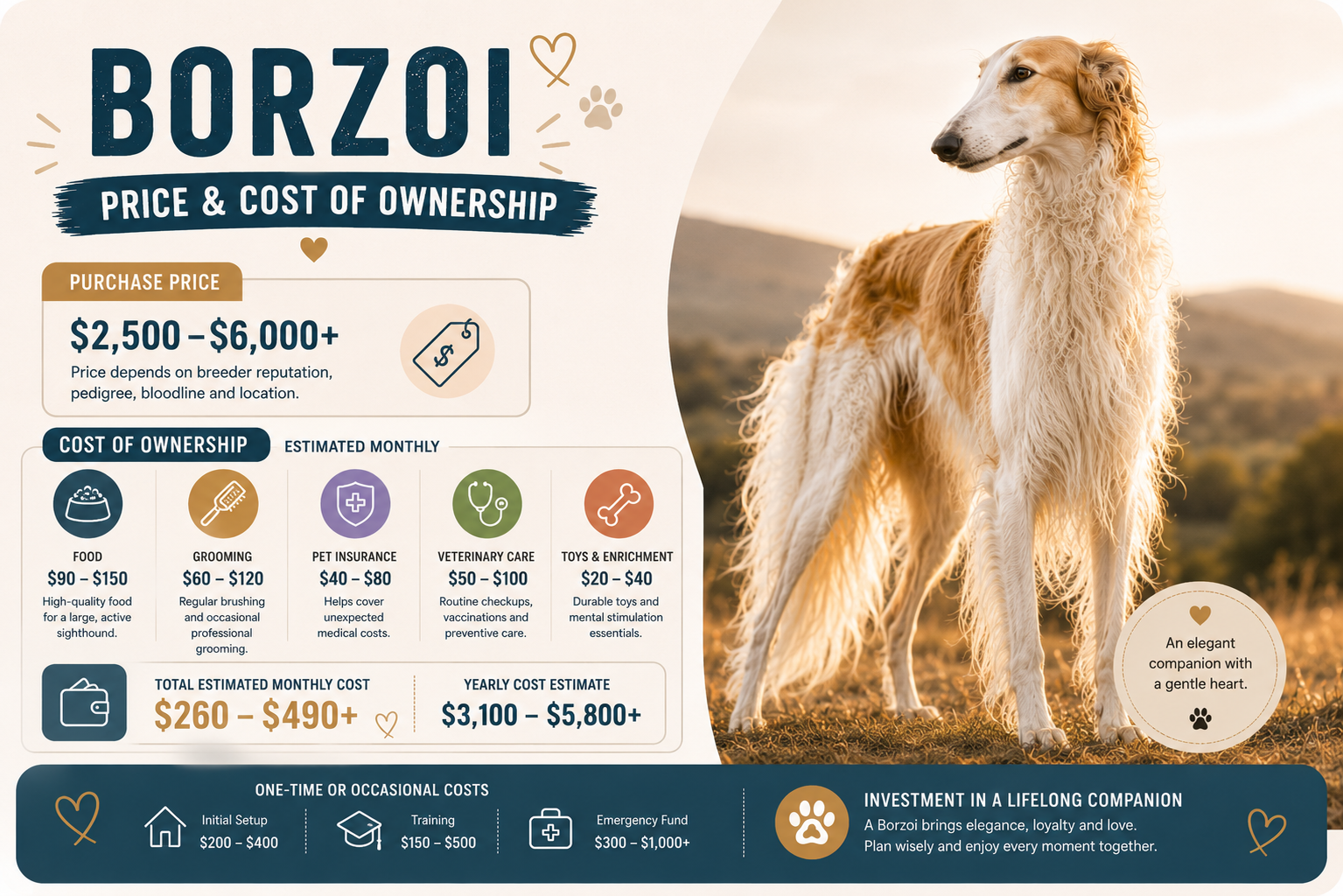
| Puppy Price | $1,500–$3,500+ |
| Adult Weight | 60–105 lbs |
| Adult Height | 26–32 inches |
| Lifespan | 9–14 years |
| Energy Level | Moderate |
| Trainability | Moderate |
| Grooming | Moderate |
Is a Borzoi Puppy Right for You?
Although Borzois are known for their calm nature as adults, puppies are energetic, inquisitive, and constantly learning about their surroundings.
A Borzoi puppy may be a good fit if you:
- Have enough space for a large breed.
- Can dedicate time to daily training.
- Enjoy gentle, intelligent dogs.
- Understand positive reinforcement training.
- Can provide long-term commitment.
They may not be ideal if you want a highly obedient breed that naturally follows every command without hesitation.
Preparing Your Home
Before your Borzoi Puppy arrives, create a safe environment.
Essential supplies include:
- Large crate
- Comfortable bed
- Stainless steel food and water bowls
- Puppy food recommended by your breeder or veterinarian
- Soft training treats
- Chew toys
- Grooming brush
- Nail clippers
- Collar and leash
- Identification tag
Remove electrical cords, toxic plants, and small objects that could become choking hazards.
Choosing a Healthy Borzoi Puppy
Selecting the right breeder is one of the most important decisions you’ll make.
A responsible breeder should:
- Perform health testing on breeding dogs.
- Allow you to meet the puppies.
- Provide vaccination records.
- Offer pedigree documentation.
- Answer your questions honestly.
- Raise puppies in a clean environment.
Avoid purchasing puppies from breeders who refuse to discuss health history or rush the sale.
The First Week at Home
The first few days are about helping your puppy feel safe.
Keep routines simple and consistent.
Your Borzoi puppy will need time to adjust to:
- New people
- New smells
- Different sounds
- Sleeping alone
- Household routines
Avoid overwhelming your puppy with too many visitors during the first week.
Feeding a Borzoi Puppy
Large-breed puppies grow differently from smaller dogs.
Choose a high-quality puppy food formulated specifically for large breeds. Balanced nutrition helps support healthy bone and joint development while reducing the risk of rapid growth problems.
General feeding schedule:
| Age | Meals Per Day |
|---|---|
| 8–12 weeks | 4 |
| 3–6 months | 3 |
| 6–12 months | 2–3 |
| 12+ months | 2 |
Always provide fresh drinking water.
Socialization Is Critical
Socialization should begin as early as possible.
Expose your puppy gradually to:
- Friendly adults
- Children
- Other vaccinated dogs
- Different walking surfaces
- Household appliances
- Car rides
- Veterinary clinics
- New environments
Positive experiences during puppyhood often lead to a more confident adult Borzoi.
House Training
Consistency is the key to successful house training.
Take your puppy outside:
- After waking up
- After meals
- After play sessions
- Before bedtime
Reward successful bathroom breaks immediately with praise or a small treat.
Accidents should never be punished. Instead, clean the area thoroughly and continue following a consistent routine.
Crate Training
A crate provides security and helps with house training.
Introduce it slowly by:
- Placing treats inside
- Feeding meals near the crate
- Allowing voluntary exploration
- Gradually increasing crate time
Never use the crate as punishment.
Early Training
Borzois are intelligent but independent.
Begin teaching:
- Sit
- Come
- Stay
- Leave it
- Loose-leash walking
Keep sessions short—five to ten minutes is usually enough for young puppies.
Positive reinforcement consistently produces the best results.
Exercise Requirements
Although Borzoi puppies enjoy playing, excessive exercise can place stress on developing joints.
Suitable activities include:
- Short walks
- Gentle play sessions
- Puzzle toys
- Basic obedience training
- Supervised exploration
Avoid repetitive jumping or long-distance running until your veterinarian confirms your puppy’s growth plates have matured.
Grooming Your Puppy
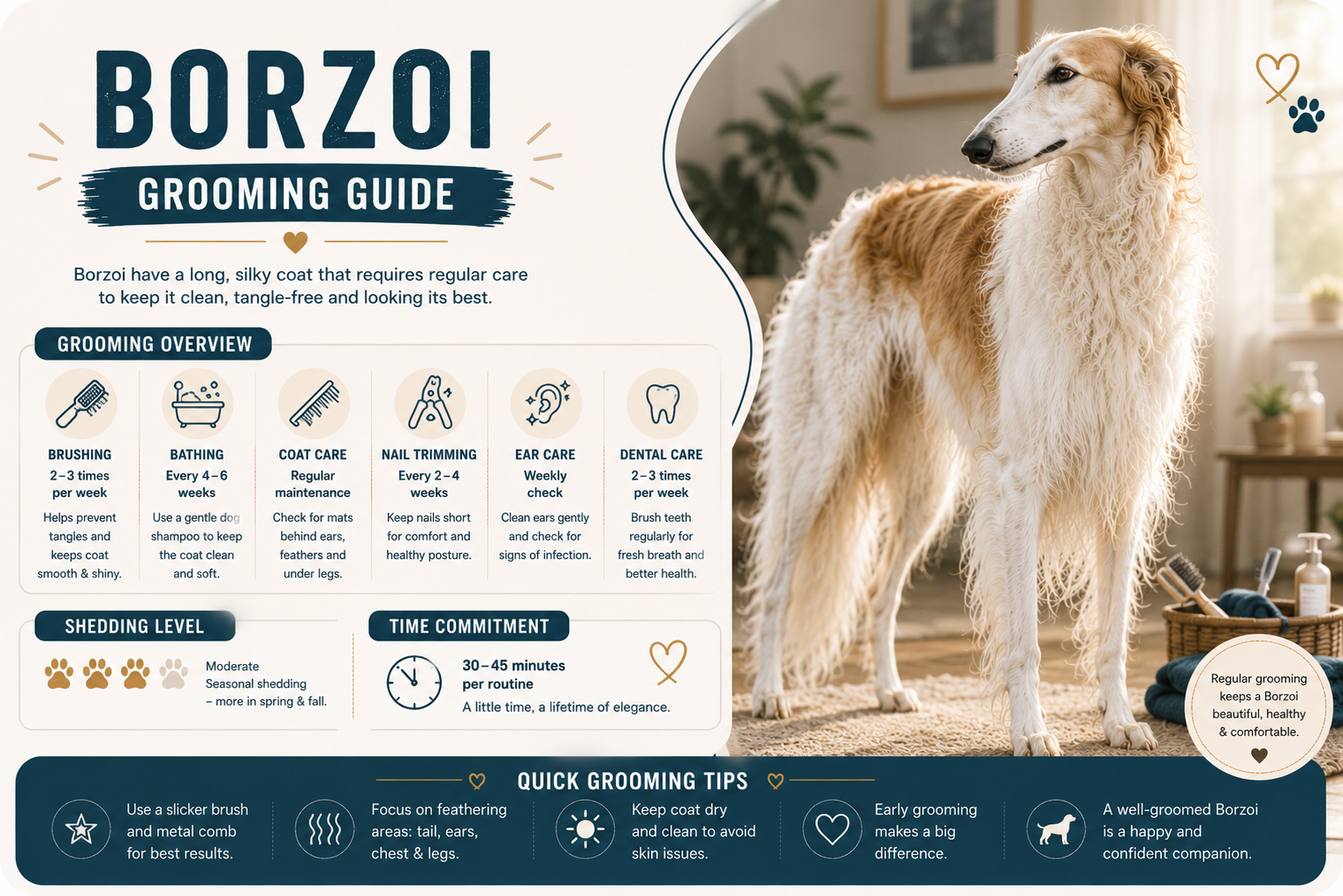
Regular grooming should begin early so your puppy becomes comfortable with handling.
Weekly routine:
- Brush the coat several times.
- Check ears.
- Trim nails when necessary.
- Brush teeth.
- Inspect paws.
Early grooming creates positive lifelong habits.
Veterinary Care
Your puppy should receive routine veterinary examinations throughout its first year.
Typical care includes:
- Vaccinations
- Parasite prevention
- Growth monitoring
- Microchipping
- Nutritional guidance
- Spaying or neutering discussions
Follow your veterinarian’s recommended vaccination schedule.
Common Puppy Mistakes
New owners sometimes unintentionally create long-term problems.
Avoid:
- Overfeeding
- Too much exercise
- Inconsistent rules
- Harsh punishment
- Poor socialization
- Skipping veterinary visits
- Allowing uncontrolled chasing behavior
Preventing these mistakes early makes adulthood much easier.
When Does a Borzoi Become an Adult?
Most Borzois continue growing until around 18–24 months of age.
Although physical growth slows after the first year, mental maturity develops gradually.
Patience remains important throughout adolescence.
Related Reading
Looking for more information about this remarkable breed? Explore our complete Borzoi Dog Guide, where you’ll learn about the breed’s history, temperament, grooming, health, and long-term ownership requirements.
You may also enjoy our detailed guides on:
Frequently Asked Questions
How much should a Borzoi puppy eat?
The amount depends on age, weight, and food type. Follow your veterinarian’s guidance and the feeding recommendations provided by the food manufacturer.
Are Borzoi puppies easy to train?
They are intelligent but independent. Positive reinforcement and consistency work far better than harsh corrections.
When should I start training?
Training and socialization should begin as soon as your puppy comes home.
Do Borzoi puppies bark a lot?
No. Most Borzoi puppies are relatively quiet compared to many other breeds.
When is a Borzoi fully grown?
Most Borzois reach physical maturity between 18 and 24 months of age.
Conclusion
A Borzoi puppy grows into an elegant, gentle, and loyal companion when given the right start in life. Consistent training, early socialization, balanced nutrition, and regular veterinary care all contribute to raising a confident adult dog.
While the breed’s independent nature may require patience, owners who invest time during puppyhood are often rewarded with a calm and affectionate companion for many years.

Related Posts